
Clothing Ecommerce Website Development for Sizes Stock and Returns
Article body starts below
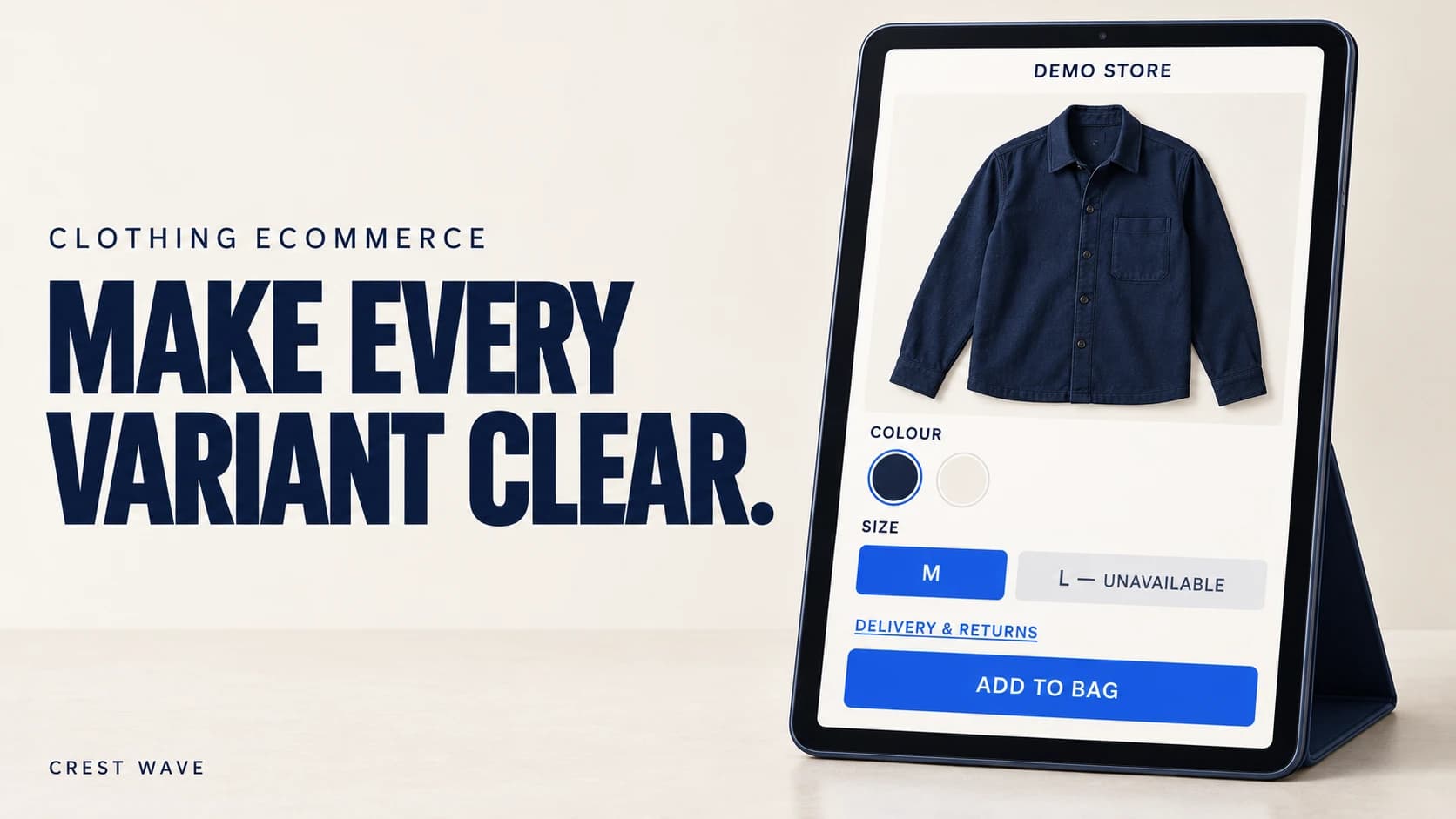
Clothing ecommerce website development needs a reliable product model before it needs an impressive storefront. Customers must be able to select the right color and size, see the relevant availability and understand what happens if the item does not fit.
For an Egyptian clothing retailer moving beyond social-media orders, the website also changes internal work. Product entry, stock updates, payments, packing and returns need owners. The development brief should connect those responsibilities to the customer experience.
Define products and variants consistently
Decide how the catalog represents a garment, its colors and its sizes. Each stock-tracked variant needs a consistent identifier, commonly called a SKU. Staff should be able to identify the exact item ordered without interpreting a free-text message.
Use consistent labels across the catalog. If sizing systems differ by brand or product, explain the difference where the shopper chooses a size. A single chart should not imply that every collection fits identically.
Separate product information from availability. A popular garment may remain useful to browse even when one size is unavailable. Decide how the page communicates that state and whether an accurately managed restock notification is appropriate.
Plan category navigation around how people shop
Create categories that reflect the range and help customers narrow their choice. Use filters for meaningful attributes, such as size or color, when the catalog data can support them consistently. Avoid a large collection of nearly identical categories with very little useful content.
Keep important products reachable through ordinary links. Google's ecommerce site structure guidance recommends navigation that connects categories and products. A product available only through an internal search box may be harder for a crawler to discover.
The development team should also agree how variant URLs and canonical tags work. Where suitable, accurate product variant structured data can help describe the relationship between products, as explained in Google's product variant guidance. Markup must match the real page and does not guarantee a search appearance.
Make stock ownership explicit
Determine which system is the source of truth for availability. If the same inventory serves a physical shop and the website, define how sales and returns update it. A spreadsheet process and a live integration have different limitations and costs.
Ask when stock is reserved and released. An unpaid order, a failed payment and an accepted order may need different handling. Confirm how the system behaves when two customers attempt to buy the last available variant.
Give staff a controlled way to correct errors. Record relevant changes so that the team can investigate an unexplained stock difference. The design should reflect the level of accuracy the operation can maintain.
Explain delivery and returns before checkout
Show the delivery information and return or exchange policy where shoppers can find them before committing. Use the business's actual approved policy and have the responsible team verify any country-specific obligations.
If cash on delivery or a particular payment method is offered, confirm that it is genuinely supported by your provider and operating process. Explain material conditions clearly. Do not list payment logos solely to make the store appear more established.
Plan the return journey as carefully as the sale. Staff need to identify the order, record the requested action and update stock and payment status appropriately. A returned item should not automatically become saleable stock before the required checks.
Test the catalog with awkward examples
Use representative products before accepting the website. Include a garment with several colors, a product with one unavailable size and an item with longer information. Check that photographs and selected variants remain consistent.
Test the order on a phone with a realistic address and delivery choice. Try payment failure, retry, cancellation and a duplicate submission. Confirm the shopper receives an understandable message and staff can see what happened.
Our guide to planning a website around its visitors can support the page brief. For fashion retail, the acceptance test must continue through stock and order administration.
Questions for the development proposal
Should we choose a platform or build everything from scratch
Evaluate an existing platform against the catalog, checkout and integration requirements first. Custom work should address a defined need. Compare maintenance and operating costs alongside the initial build.
Can the store support Egypt and Gulf customers
Potentially, if the relevant delivery, payment, currency, language and policy requirements are supported. Confirm the actual market setup instead of treating a translated homepage as a complete international launch.
What should the handover demonstrate
Ask the team to add a product, update a size, process an order, handle a return and export the relevant records. Confirm access ownership, backup arrangements and the support scope.
Crest Wave develops ecommerce websites alongside marketing services. Send your product catalog and current stock and order process to discuss a clothing store that fits your operation.