
Manufacturing Marketing in Egypt That Helps Buyers Request a Quote
Article body starts below
Manufacturing marketing in Egypt should help a buyer decide whether your factory can supply a specific requirement. Purchasing teams need to understand materials, specifications, production capabilities and the process for obtaining a quote. A campaign that generates vague messages may create work without producing useful commercial opportunities.
The first step is to identify what the factory wants to sell and to whom. A producer seeking repeat distributor orders needs different content from a workshop quoting custom components for individual projects.
Organize information around the buying requirement
Start with the product families or manufacturing services that matter commercially. Explain the applications, available options and limitations buyers need to evaluate. Use terminology that matches actual inquiries and specifications.
Separate the needs of procurement, engineering and management. Procurement may need delivery and commercial information. An engineer may need materials, dimensions or a drawing review. A manager may need confidence that the supplier can deliver the agreed scope consistently.
Give these readers connected information instead of one crowded company profile. A product page can introduce the offering and link to an approved specification sheet. A capability page can explain the process and the conditions under which it is available.
Publish evidence the factory can substantiate
Use real production photography and accurate descriptions of equipment and processes. Explain what the factory performs internally and which work depends on another supplier. Avoid imagery that implies ownership of facilities you do not operate.
If you mention certification, state the actual certificate, scope and status after internal verification. Do not display an expired badge or imply that one certificate covers every product and site. Capacity figures also need context, such as product type and operating assumptions.
Our guide to product photography that tells a brand story can support planning. In manufacturing, useful photography often needs to show details that a commercial buyer can assess, not simply make machinery look impressive.
Design a useful request for quotation
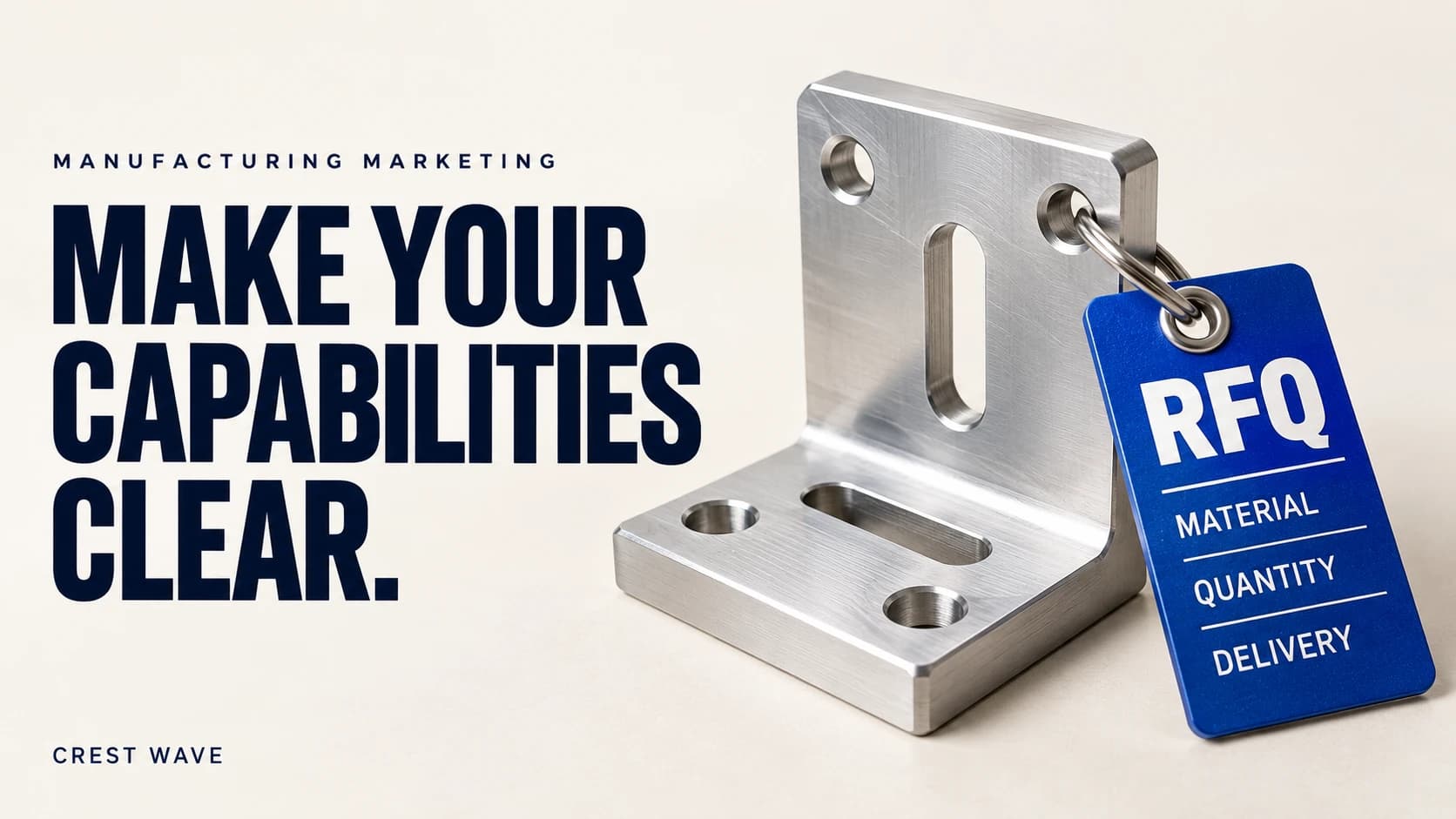
A request for quotation, or RFQ, should collect enough information for the next commercial step. Common fields include the product or process, estimated quantity, intended delivery location and preferred timing. The required detail depends on the type of work.
Where drawings or specifications are necessary, provide an appropriate route for sharing them. Define who can access uploaded files and how commercial confidentiality is handled. Do not make a public form require sensitive documents before the buyer understands the process.
Allow a buyer to say that a requirement is still being defined. An early engineering conversation may be appropriate, but it should be recorded differently from a complete RFQ that can move directly into quotation.
Choose channels for the actual buying situation
Search content can answer product, material or supplier-selection questions. Professional networks and direct outreach may help when specific organizations are the intended buyers. Select channels from the audience and buying process rather than from the channels another industry uses.
For example, a hypothetical packaging manufacturer may receive requests for tiny quantities that it cannot economically produce. Publishing clear order conditions and use cases can help visitors assess fit before contacting sales. The outcome must still be evaluated from real inquiries.
If the factory serves Gulf markets, explain the actual supply model and the information needed for a cross-border quote. Have the responsible team verify commercial and delivery terms. Do not create fictional local offices or promise delivery arrangements that have not been established.
Connect marketing to technical sales
Assign every inquiry to an owner and record its stage. A marketing inquiry, a technically suitable RFQ, a submitted quotation and a purchase order are different events. Report them separately so that the team can see where progress stops.
Capture reasons for a lost opportunity where they are known. The buyer may need an unsupported material, a different quantity or a deadline the factory cannot meet. That information can improve the product pages and campaign focus without turning every lost order into an advertising problem.
Review quote turnaround and the completeness of incoming requirements. Useful manufacturing marketing helps the right buyers provide information that the sales and technical teams can act on.
Questions manufacturers should ask an agency
Does a factory need daily social posts
Publishing frequency should follow useful material and production capacity. A clear capability page, accurate catalog and reliable RFQ process may deserve attention before a large volume of posts.
Should the catalog be available only as a PDF
A downloadable catalog can help procurement teams share information internally. Keep the main products and capabilities readable on web pages as well, with an obvious route to request a quote.
Which result belongs in the marketing report
Show suitable inquiries and their progress into RFQs, quotations and orders. Keep reporting periods clear because an order received this month may have started with an inquiry much earlier.
Crest Wave connects marketing with website and software work. Send your product categories, target buyer and current quotation process to discuss the next step for your factory.