
Marketing and CRM Integration That Keeps Inquiries Moving
Article body starts below
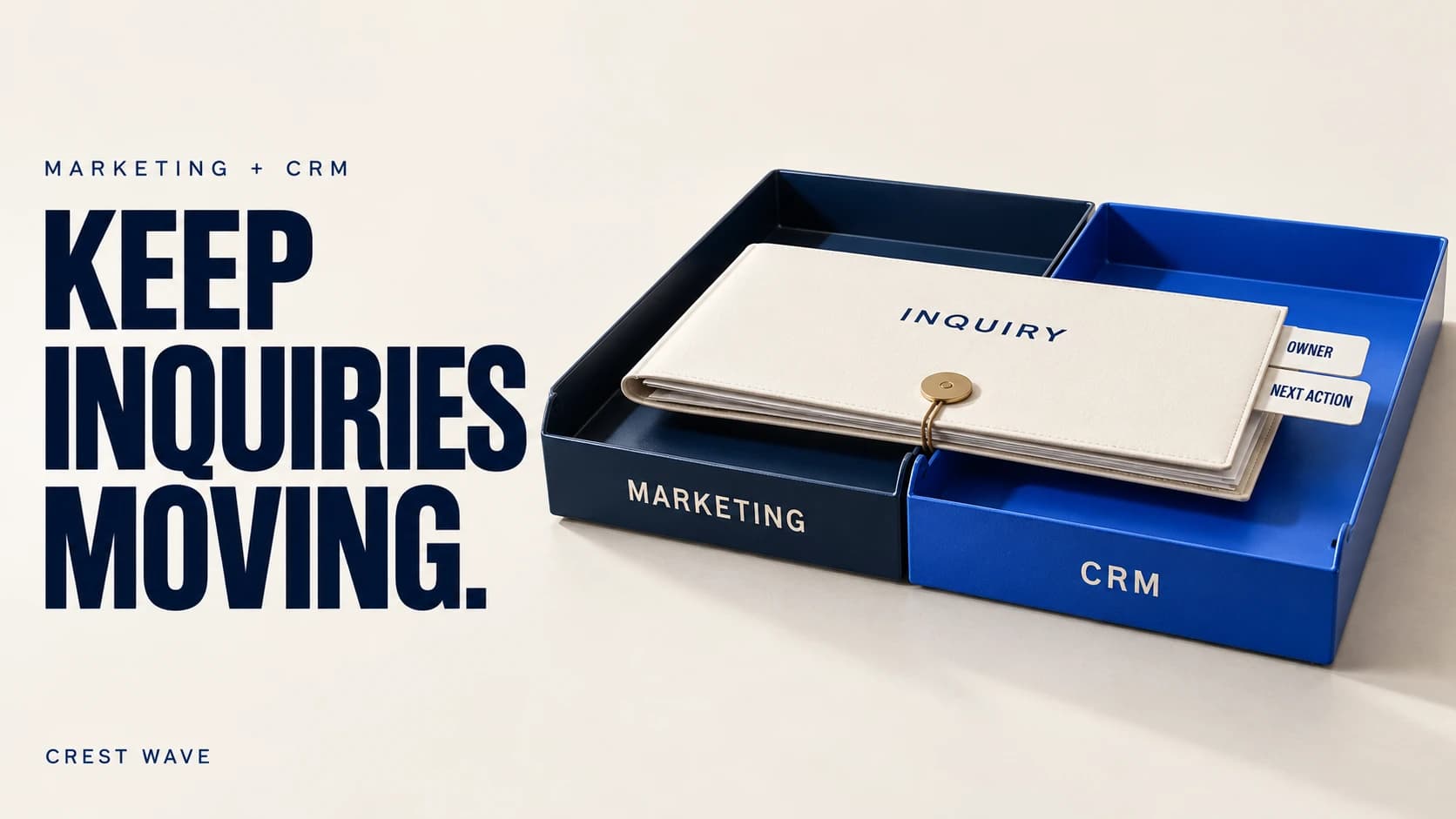
Marketing and CRM integration connects the source of an inquiry with the people responsible for following it up. A customer relationship management system can hold contact details, sales stages and next actions. The integration is useful when it preserves the information the team needs and reliably delivers new inquiries to the right owner.
Start with the actual workflow. Identify how inquiries arrive, what information they include and what should happen next. Connecting software before agreeing on these decisions can automate an inconsistent process and make the resulting report difficult to trust.
Map the inquiry from arrival to outcome
List the channels your team genuinely uses, such as website forms, calls and messaging conversations. Then define the stages that reflect real work: received, contacted, qualified, proposal sent and closed, for example. Adjust them to the business rather than adopting a long default pipeline.
Write the condition for moving between stages. Sending a message is not necessarily the same as contacting the customer successfully. A proposal request and a signed agreement are different events. Clear definitions help marketing and sales interpret the same record consistently.
Decide which information must travel with the lead
For each inquiry, consider a unique identifier, received date, requested service, contact details, known source and assigned owner. Add campaign information only when it has been captured reliably. Leave unknown attribution unknown rather than guessing it from the latest advertisement.
Collect the minimum information the workflow requires. Restrict access according to responsibilities and avoid placing personal customer details in general analytics tools. Agree on retention, backup and export requirements with the people responsible for the data.
Specify the integration behavior
A developer needs more than the instruction to connect the form to the CRM. Define how fields map, which values are required and how duplicate submissions are handled. Confirm that the selected products support the required interfaces and permissions under their current plans.
Decide what should happen if the CRM is temporarily unavailable. The business needs a visible failure alert and a controlled way to recover the inquiry. A success message shown to the customer should not conceal a lost internal submission.
Assign ownership and the next action
Set routing rules based on the actual team. A service category, location or current workload may determine the owner. Specify who receives unassigned inquiries and who covers an absent colleague. Keep a dated next action for every active opportunity.
Consider a hypothetical company selling marketing and website services. A website inquiry can reach the relevant person with its project description attached. After a call, that person records the agreed next step and proposal date. The objective is a usable handoff, not automation for its own sake.
Test realistic cases before launch
Use fictional test data and inspect the full journey:
· A valid new inquiry reaches the correct owner.
· A repeated submission does not inflate the new-lead count.
· Missing or invalid fields produce a useful response.
· A failed connection is visible to the responsible team.
· The next action and status update appear correctly.
· Authorized staff can retrieve or export the necessary record.
Also test the customer's experience on a phone. The visitor journey on the website and the internal CRM process should agree about what has happened and what comes next.
Report outcomes without mixing time periods
Record unique inquiries, qualified inquiries, calls, proposals and signed deals as distinct measures. For weekly operations, you can report how many activities happened that week. To calculate a closing rate, follow the same group of opportunities through its sales cycle.
For example, deals signed this week may have originated months earlier. Dividing them by this week's new inquiries would not describe the closing rate of those new inquiries. Marketing and CRM integration should make the relationship traceable rather than create a misleading shortcut.
Questions before choosing the system
Does every small business need a custom CRM
No. Evaluate an existing system against the actual workflow first. Configuration may be enough. Custom development is more appropriate when a meaningful requirement cannot be met sensibly with available options.
Can every messaging channel connect automatically
Availability depends on the provider, account, permissions and integration method. Verify the current supported route before promising automatic synchronization.
What should the handover include
Request field definitions, access responsibilities, documented error handling and user training. Confirm who maintains the connection and how future changes will be assessed.
Crest Wave combines marketing with software work for customer acquisition and follow-up. Send a short description of how inquiries currently reach your team and where they get delayed.