
Qualified Lead Generation for Businesses That Need Better Inquiries
Article body starts below
Qualified lead generation starts by defining which inquiries your business can realistically serve. A message, form submission or phone call is an opportunity to understand a need. It becomes a qualified inquiry only when it meets agreed criteria, such as service fit, location and an appropriate next step.
That distinction changes how you evaluate marketing. A campaign producing many low-fit messages can occupy the sales team without creating suitable opportunities. A smaller volume of relevant inquiries may be more useful, but the conclusion must come from actual follow-up and consistent records.
Define qualification before launching the campaign
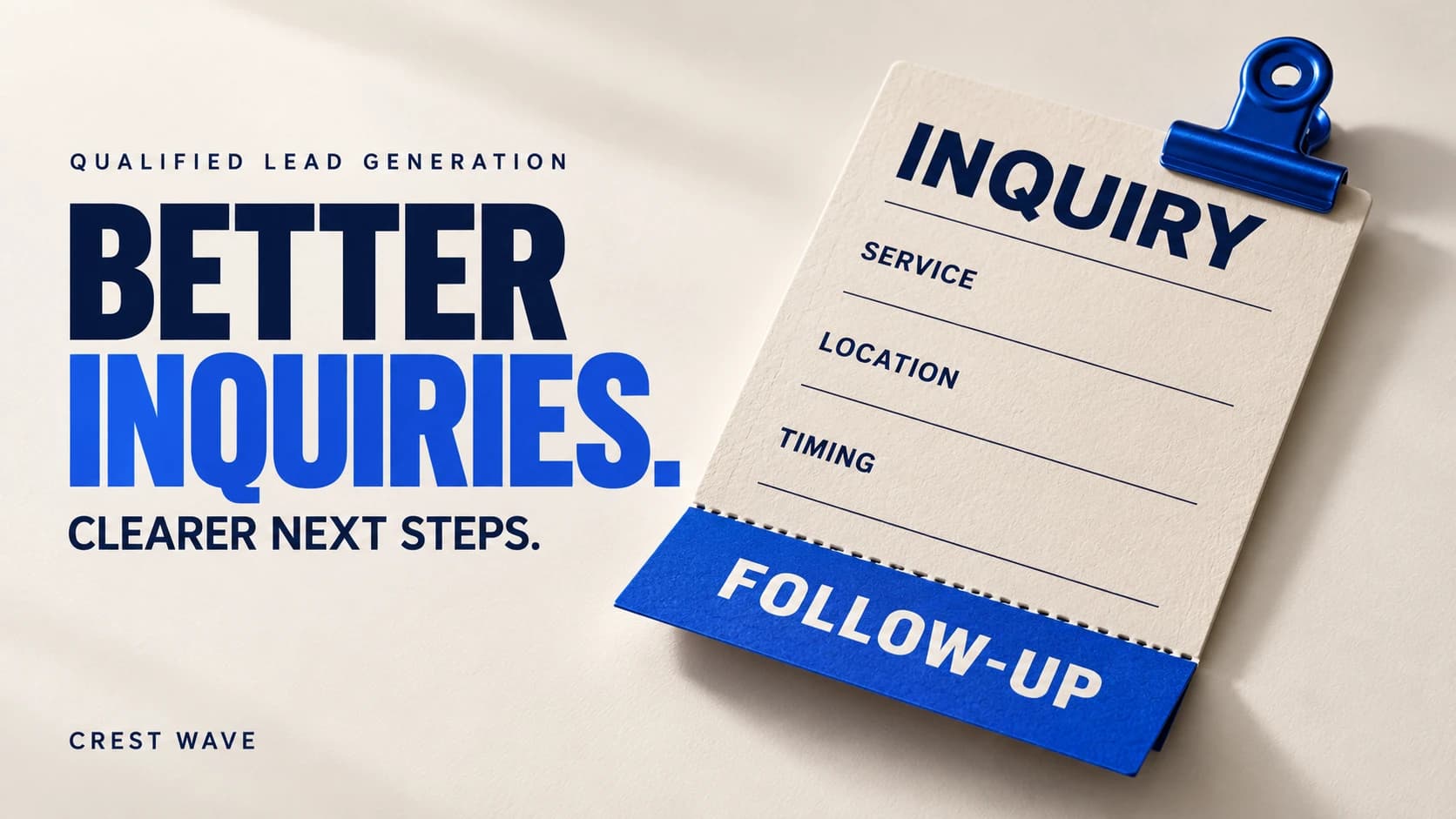
Ask the sales team what it needs to know before offering a call or proposal. For a service company, this may include the requested service, the project location and the current problem. Budget range or timing may also matter, depending on the offer.
Keep the questions proportionate. Collecting unnecessary detail creates friction and may introduce privacy concerns. Distinguish between an unsuitable inquiry and a relevant customer who still needs help understanding the options. Record the reason for each qualification decision.
Align the promise with the actual offer
Review the advertisement, destination and first reply together. They should describe the same service, audience and conditions. A broad promise may attract people looking for something your business does not provide.
For example, a hypothetical supplier serving businesses might receive consumer requests when its creative shows a product without explaining the buying context. Clarifying who the offer serves can improve relevance. That hypothesis should be tested against the inquiries received, rather than treated as a guaranteed outcome.
Capture the inquiry without losing context
Record a unique inquiry identifier, source when known, received date, requested service and owner. Keep the conversation history connected to the same record. Multiple messages from one person should not become multiple new leads in the weekly total.
Avoid assuming that a button click proves a completed inquiry. A visitor may open a messaging app without sending anything. Use the information your systems can reliably observe and label uncertain attribution honestly.
Give every suitable inquiry a next action
Agree on the response process and who covers absences. After the first reply, assign the next step: request missing details, schedule a call, prepare a proposal or close the inquiry with a reason. A record without an owner or action date is easy to overlook.
A CRM can support this process when the team needs shared access, reminders and consistent stages. Start with the workflow before selecting or customizing software. Technology will not correct an unclear definition of responsibility on its own.
Compare costs using the same definitions
Here is a hypothetical example, not a client result. A campaign spends EGP 12,000 and produces 120 unique inquiries. If 24 meet the agreed qualification criteria, cost per inquiry is EGP 100, while cost per qualified inquiry is EGP 500. The qualification rate is 20%.
If six of those inquiries later become signed deals, the advertising spend per deal is EGP 2,000. That figure excludes agency fees, sales costs and delivery expenses, so it does not establish profit or total acquisition cost. Follow the same inquiry group over a suitable period before calculating its closing rate.
Use sales feedback to decide what changes
Group the reasons opportunities fail. Examples include the wrong service area, an unsuitable requirement, no response after follow-up or a proposal that did not fit the customer's needs. Keep these categories understandable for the people recording them.
Then identify the appropriate intervention. Poor-fit inquiries may justify a change in message or targeting. Slow proposals may require an internal process change. If visitors cannot understand the service, review the website journey before adding more traffic.
Questions about lead quality
Is a higher cost per inquiry always bad
No. Compare relevance, qualification and downstream outcomes. A cheaper inquiry is not automatically a better opportunity, and an expensive inquiry still needs evidence of value.
Can we judge a campaign from one day
One day can reveal broken links or incorrect information. Commercial evaluation needs enough suitable data and time for the actual sales process. Avoid announcing a winner from a few isolated outcomes.
What should a useful report include
For qualified lead generation, show spend, unique inquiries, qualified inquiries and reasons for rejection. Record calls, proposals and signed deals separately, with dates and clear attribution limits.
Crest Wave connects marketing activity with the process that receives and follows up inquiries. Send your page or website and explain where your current inquiries stop progressing