
Retail Mobile App Development When Repeat Customers Need More
Article body starts below
Retail mobile app development makes sense when a business can name a recurring customer task that the app will make easier. Reordering, managing a loyalty account or collecting an order may provide a reason to return. A mobile app needs that reason because customers must choose to install and keep using it.
For retailers in Egypt, the first decision is whether the problem requires an app, a better mobile website or an improvement to internal operations. The right scope follows the customer need and the systems that must support it.
Identify the task customers will repeat
Describe a specific use case. A customer may want to repeat a previous order, check an approved loyalty balance or choose collection from a nearby real branch. Explain how often the task occurs and what makes the current process inconvenient.
Use evidence from customer conversations and existing records where available. A wish to have an app because competitors have one is not enough to define the product. Start with the experience that would justify installation for your intended customer.
If the main requirement is occasional browsing and checkout, improving the mobile website may be the appropriate first step. The app and website can serve different roles, but both need a reliable connection to the business.
Define the first release around one useful journey
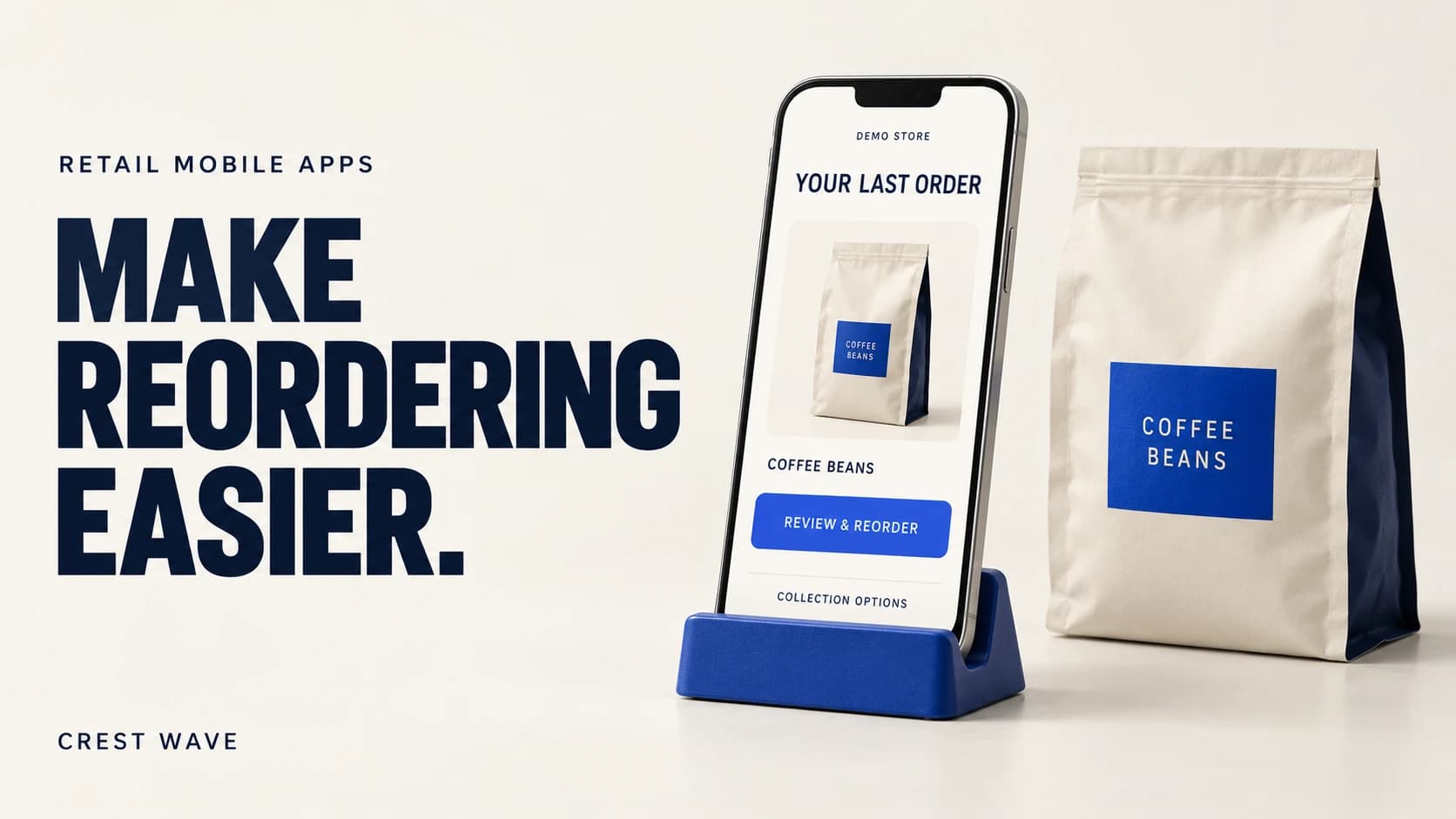
Choose a core journey that the team can support from beginning to end. For example, a hypothetical retailer might let existing customers find a previous order, adjust available items and request collection. That first release does not automatically need every feature of a large marketplace.
Write down what happens when an item is unavailable, a customer changes branch or a payment fails. These exceptions often determine whether the app is useful in practice. Include customer support and recovery paths in the scope.
Separate essential functions from later ideas. A feature should earn its place by supporting the defined task or an operational requirement. This helps the team estimate development and ongoing support with fewer ambiguous promises.
Connect the app to the source of truth
Decide where product data, stock, prices, orders and customer permissions are maintained. The app should not create a second conflicting version of records that already exist in another system.
Check the interfaces and permissions of the current ecommerce, POS or management platform before promising integration. An available export is different from reliable live synchronization. Document how often data updates and what happens if a connection fails.
For loyalty features, define earning, redemption, expiry and reversal rules before designing the screens. If an order is canceled or returned, the balance needs the agreed treatment. Display information that staff can explain and reconcile.
Make account access and notifications useful
Request only the information and permissions needed for the chosen functions. Explain what the customer is signing up for and provide appropriate account controls. A permission request should relate to a clear feature rather than appear automatically without context.
Notifications need a purpose. An order-status message has a different role from a promotion. Give customers suitable choices and keep campaign frequency connected to useful information. Repeated irrelevant messages can weaken the reason to keep the app.
Plan how support verifies an account and helps someone recover access. The development brief should cover those processes alongside login screens. Review handling of personal data and access responsibilities with the business's responsible team.
Budget for operation after release
An app continues to need maintenance, provider coordination and support after development. Agree ownership of the relevant store accounts, code, hosting and integrations. Identify which ongoing costs are included and which are billed separately.
Platform submission requirements and software dependencies can change. The developer should check the current requirements for the chosen release and explain who manages updates. Do not treat initial store approval as a permanent guarantee of compatibility.
Test with the devices and conditions that matter to your customers. Include a slower connection, interrupted checkout and a returning user with an existing order. Staff should be able to see and resolve the resulting requests consistently.
Evaluate use beyond installations
Track completion of the core task, repeat use and relevant order outcomes. An installation count does not show whether people can reorder successfully or whether the app improves a commercially useful journey.
Compare the experience with the current mobile website or process using a consistent definition of success. Keep attribution limits visible. A new channel may redistribute existing orders rather than create entirely new demand.
Our guide to planning a website around its visitors offers a useful starting principle: define the customer decision before selecting the interface. Apply the same discipline when choosing an app.
What should a retailer prepare for a development discussion
Bring the current website, the task customers repeat, the systems holding stock and orders, and examples of the problem. Those details help distinguish a suitable app scope from work better handled elsewhere.
Crest Wave's software services include mobile applications and custom business systems. Send your current store link and the recurring customer task you want to improve to discuss the most suitable route.