
A Social Media Marketing Strategy Built Around Business Decisions
Article body starts below
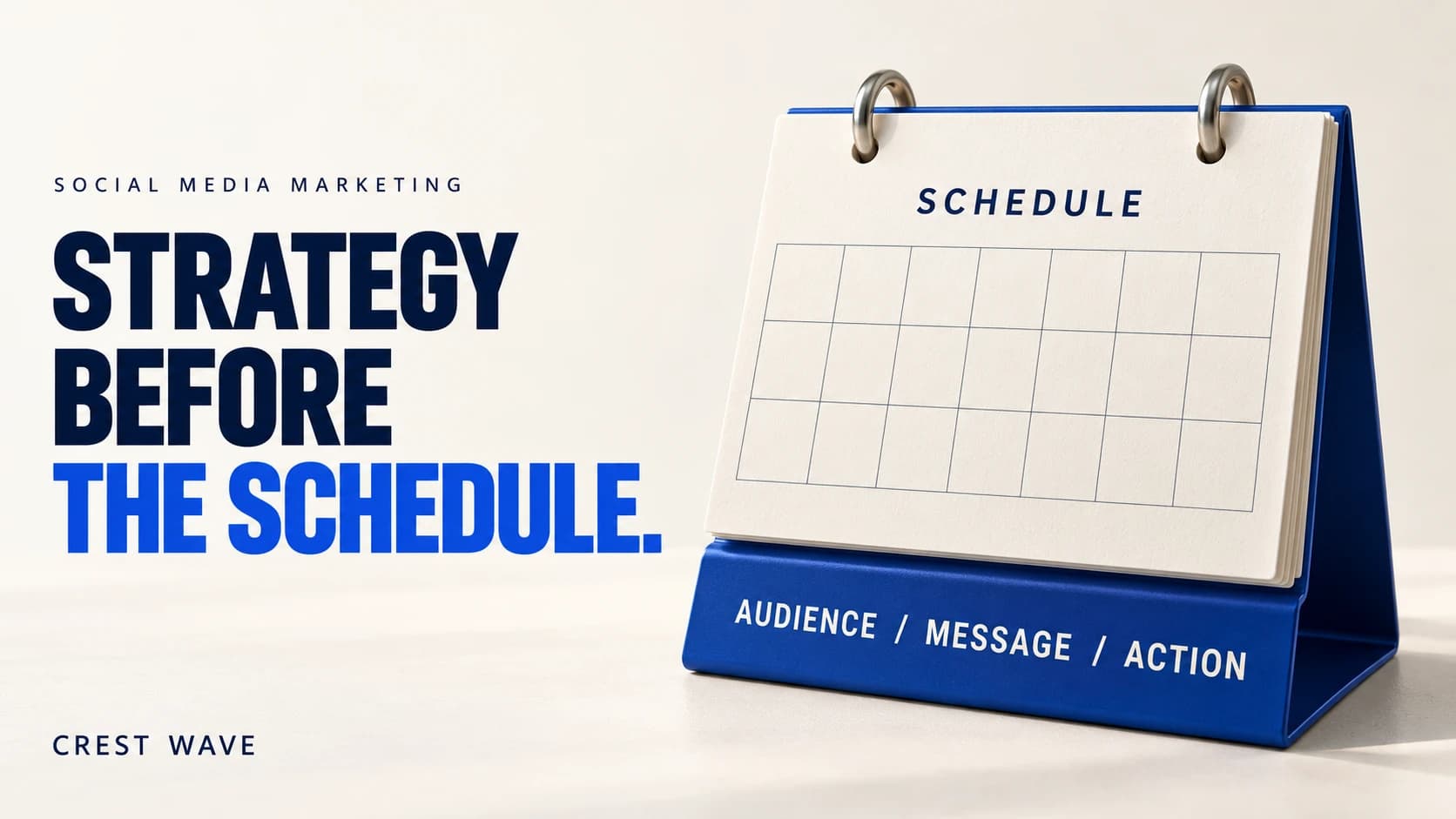
A social media marketing strategy should identify who you want to reach, what they need to understand and what your business wants them to do next. The posting calendar comes after those decisions. Without them, a page can publish regularly while leaving potential customers unsure about the offer.
Start with one commercial priority and a realistic operating plan. You may need to introduce a service, clarify an existing offer or attract better inquiries. Each priority changes what you publish, how you use advertising and which responses deserve closer review.
Write an audience description your team can use
Define the buying situation as well as the person. A business owner preparing a first launch needs different information from a marketing manager replacing an agency. A family choosing a restaurant considers different details from an office ordering a recurring lunch service.
Use questions from actual conversations when available. Review why people contact you, what they misunderstand and what stops them from taking the next step. Do not invent a detailed customer profile merely to fill a presentation.
Give the page a clear job
Decide what the social presence needs to contribute. It might help customers recognize the business, evaluate its work or begin a conversation. Clarify how those activities connect to your website, store or sales process.
Choose a small set of measures that fits that job. Reach and engagement can help assess distribution and response, but they do not directly establish sales. When inquiries are the goal, track their quality and what happens after the first message.
Organize content around buyer questions
Useful content explains the offer, demonstrates relevant work and answers practical objections. A service company can explain how a project starts, what information is needed and what a deliverable includes. A retailer can show product use, available options and ordering information.
Keep each piece focused. A single post should not attempt to explain every service, introduce the team and promote a discount at once. Give the designer a clear message and the reader a manageable next step.
Choose formats for their purpose
Use a short video when motion or explanation improves understanding. Use a static design when the message benefits from a clear visual hierarchy. A sequence of images can explain steps when each frame contributes useful information.
Maintain recognizable typography, color and image treatment across those formats. This does not require every post to look identical. Our guide to social media design within a consistent visual language explores how variety can remain coherent.
Build a practical production and approval process
Assign an owner for factual accuracy and an owner for final approval. Agree on how the agency receives updates about stock, pricing, opening hours or service availability. Record the deadline for supplying material before promising a publishing schedule.
If the team cannot produce the planned volume without repeating itself, reduce the volume or change the production approach. Keep time for reviewing responses and improving existing content. A sustainable process makes it easier to learn from what the audience actually asks.
Connect publishing with inquiry handling
Write a response guide for the most common questions. Define which inquiries can be answered immediately and which need a specialist or sales call. Keep ownership clear when conversations move from a public comment to a private channel.
Imagine a hypothetical company that receives repeated questions about whether website maintenance is included. It can clarify the service page, publish a short explanation and improve the initial reply. The strategy uses a recurring question to remove uncertainty across several points in the journey.
Review the strategy in stages
For an initial planning cycle, use the first stage to check the offer, page information and production process. Use the next stage to compare how different messages affect relevant responses. Later, refine the scope based on the questions, inquiries and operational issues observed.
These stages are planning choices, not promises of results within a fixed number of days. Keep notes on what changed and why. A social media marketing strategy becomes more useful when the team can explain its decisions using consistent evidence.
Questions before approving the strategy
Is a calendar the same as a strategy
No. A calendar records what will be published and when. The strategy explains the audience, commercial purpose and choices behind that work.
Do we need every platform
Choose channels your intended customers use and your team can support. Expansion should follow evidence and capacity rather than a desire to occupy every available profile.
Crest Wave develops content, design and campaign work around the needs of the business. Send your page and the commercial priority your social media should support